



Plenty of jewellers also sell sunglasses, and plenty of opticians stock watches and small pieces of jewellery. Either way, the frame leaves the counter inside a glasses case that the customer will use every day for years. It is the piece of your branding they will see most often, far more than the carrier bag or the receipt.
This guide covers the main types of glasses cases and boxes, how to match the format to the frame and its selling price, and what to check before personalising them with your logo.
Hard, soft or foldable: the three basic formats
Before thinking about colour, decide what the glasses case actually needs to do. Each format solves a different problem:
- Hard glasses case. Protects the frame from knocks and from pressure inside a handbag or a drawer. It is the usual choice for prescription glasses and for mid- to high-end sunglasses. Our black hard glasses case, 160×65×33 mm, pairs glossy faux leather on the outside with a black lining and a hinged lid.
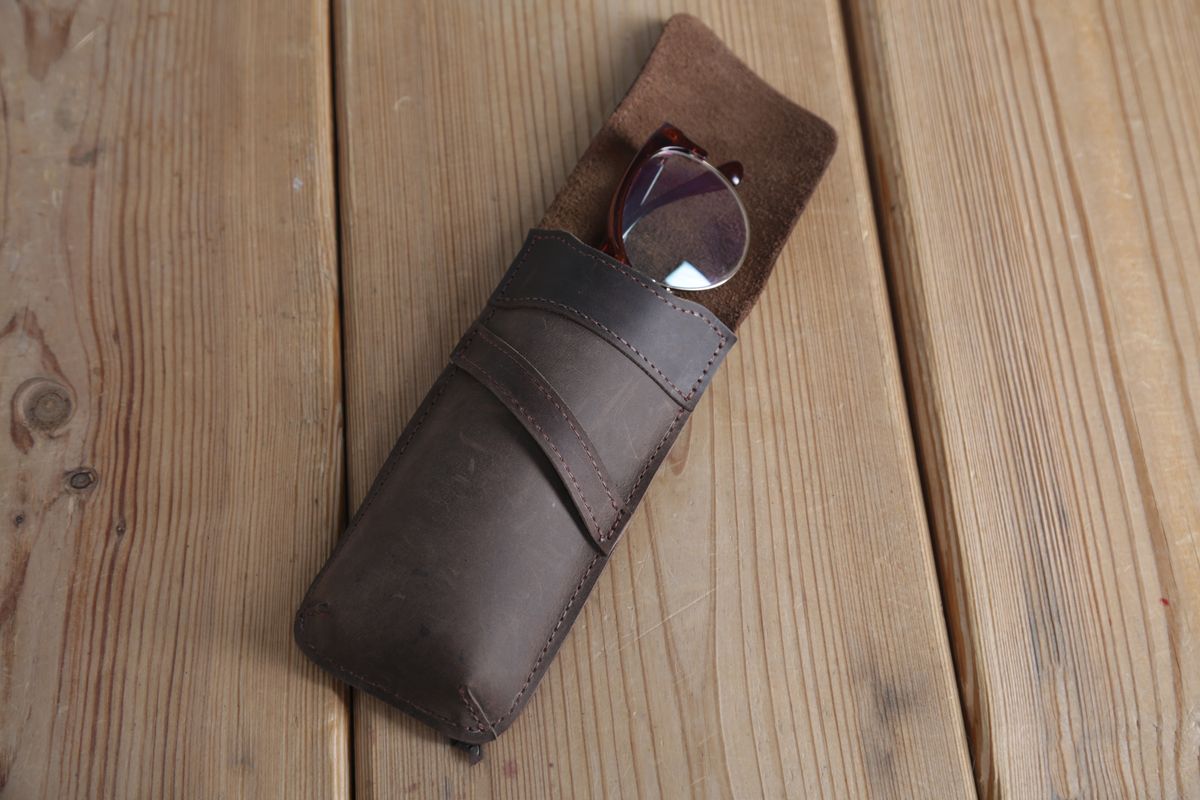
- Soft glasses case or pouch. Takes up very little space, weighs less and works well as a second pouch, for reading glasses or for slim frames. The soft velvet-lined glasses case has a matt faux leather exterior, a velvet interior and stitched edges.
- Foldable glasses case. Arrives flat, assembles in seconds and saves room in the stockroom. Ours has a hidden magnetic closure and an interior of 164×40×40 mm.
A simple rule: if the glasses cost enough for the customer to want to look after them, give them a hard glasses case. For an accessory or a pair of readers, a soft pouch does the job and keeps the cost of each sale down.
Getting the size right
Most complaints about glasses cases have nothing to do with quality and everything to do with size. A large frame squeezed into a tight fit gets rubbed every time the lid closes, while a small one rattles around in an oversized shell.
- Measure the folded frame: overall length, lens height and depth with the temples closed.
- Compare it with the interior size, not the exterior one. The measurements shown in each product name are external.
- Know the three hard sizes: small (155×55×36 mm), medium (160×65×33 mm) and large (167×64×42 mm). The large one suits wraparound sunglasses and chunky acetate frames.
- For sports or strongly curved frames, send us the measurements before ordering and we will point you to the right model.
Materials and colours that match your shop
Faux leather is the most practical material for a glasses case: it stands up to daily use, wipes clean and looks smart without pushing up the price. What really changes the perception is the finish and the lining:
- Glossy black with a black lining: understated and elegant, it works with any frame brand.
- Black with a grey lining: the contrast inside makes the glasses stand out as soon as the lid opens.
- Grey and brown: warmer tones for shops with a natural or vintage look.
- Velvet interior in the soft versions: softer to the touch and gentler on lenses.
If you also sell watches or fine jewellery, keep the same colour family across all your packaging. We go into this in more detail in our article on packaging for watches and fine jewellery.
Personalising with your logo: what you need to know
A glasses case stays with the customer for years, which makes it one of the best places to put your brand. Almost the whole range can be stamped with your logo. The practical points:
- A €30 printing block, paid once. It is made a single time and reused for every future order with the same logo.
- Logo size. It depends on the model: on the medium hard version the lid takes a logo of up to 90×38 mm, while the soft versions have a smaller area. Each product page shows the maximum.
- Stamping colour. Gold, silver or copper on dark faux leather gives a clear contrast; on grey or brown, choose a shade that stays easy to read.
- Proof before production. You receive a proof by email to review and approve.
A simple logo without very fine lines stamps better than a highly detailed one. There are more tips in our guide to custom jewellery packaging with your logo.
Beyond the glasses case: compartment boxes, cloths and kits
The glasses case is what the customer takes home, but the shop also needs to store and display. In the same section you will find:
- Boxes with 3, 5 or 12 compartments, in black or brown, to store frames in the stockroom or show several pairs at once on the counter. The 5-compartment glasses box (301×168×52 mm) is a good middle ground.
- Microfibre cloths: a light grey one measuring 180×180 mm and a black one measuring 300×350 mm, designed to be personalised.
- A glasses cleaning kit, a useful extra to hand over with the frame or to sell at the till.
Slipping a cloth into each glasses case costs very little, and customers see it as part of the service.
Quantities, minimums and how to plan your order
Minimum quantities depend on the model. On the medium hard version, for example, the minimum order is 24 units, ordered in multiples of 24; the soft pouches and the cloths come in larger packs. Each product page shows the minimum, the multiple and the volume discounts, and the price is on the page, excluding VAT.
To get started, work from your real sales over a few months:
- Count how many pairs you sell each month and of which type: prescription, sunglasses or readers.
- Choose one main hard model for most sales and a soft one for lower-priced glasses.
- Decide whether to personalise: if you plan to reorder, the printing block pays for itself quickly.
- Add cloths or compartment boxes if they help you keep the counter tidy.
If you are not sure which model suits your frames or how your logo will look, write to us through the contact page with the measurements and a rough quantity, and we will help you before you place the order.