



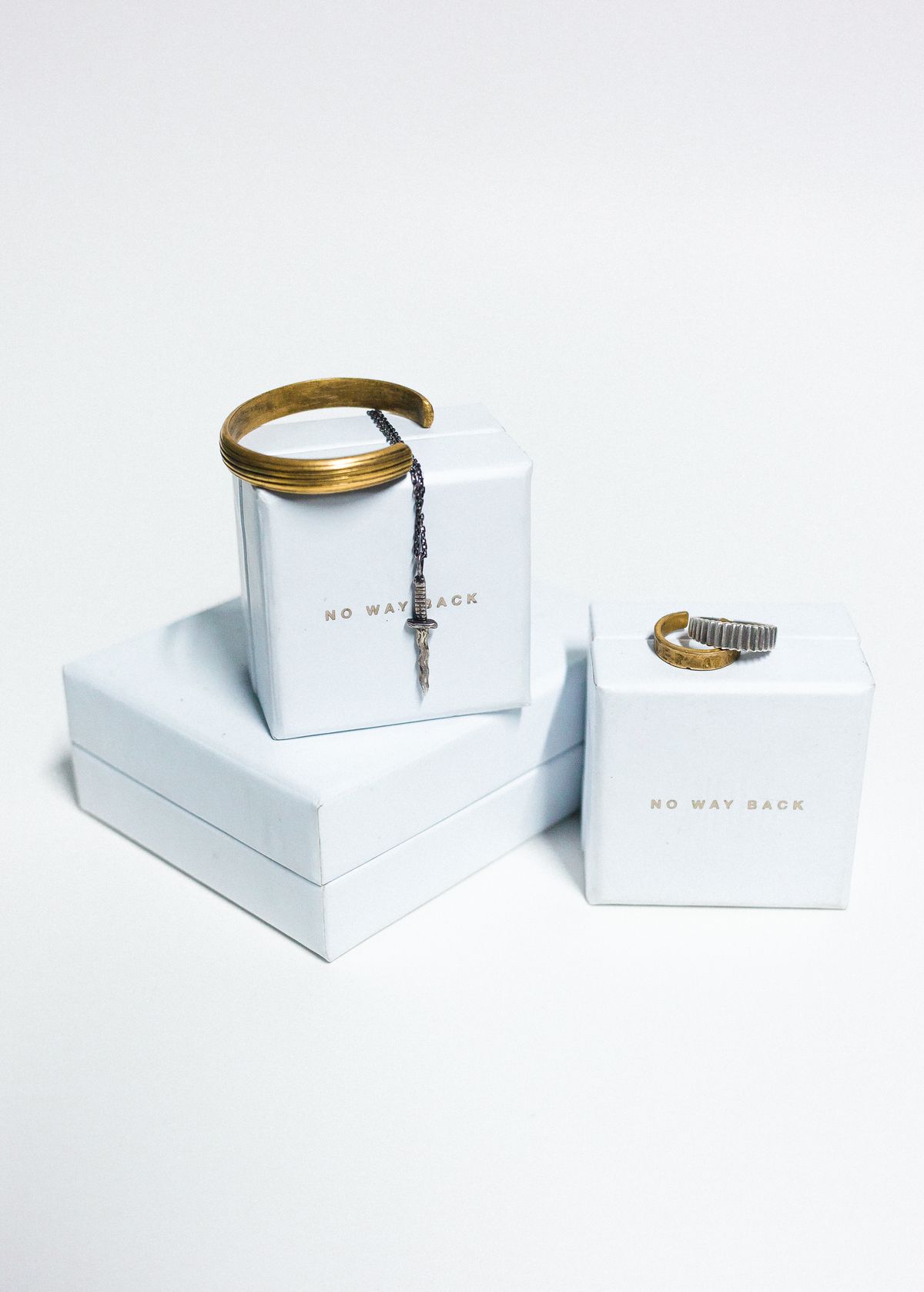
A watch or a fine jewellery piece is not simply “a bigger piece of jewellery”: the volume, the weight, the way it rests and — above all — what the customer expects on opening the box are all different. Packaging that works for a ring falls short here, and not only because of size.
Why a watch does not fit in a jewellery case
The difference starts with geometry. A watch needs height for the case and a curved space for the bracelet or strap, which must not be folded at an angle. A flat case forces the strap and leaves permanent marks on the leather, especially on calf and rubber.
Weight changes too. A steel automatic can pass 150 grams: if the interior does not hold it, the piece shifts in transit and knocks the crystal against the lid. And the closure changes: a watch case is opened and closed far more often than a ring case, because the customer uses it for everyday storage.
The cushion: the part that changes everything
The cushion is what separates a proper watch case from an improvised one. It needs the right diameter for the customer’s wrist — not so thin that the watch rattles, not so thick that it strains the closure — and medium firmness: too soft and it does not hold, too hard and it marks the bracelet.
For watches, the removable cushion is the standard: it lets you adjust the strap, makes cleaning easier and improves the try-on at the counter. For fine jewellery with pendants or rigid necklaces, the equivalent is a bespoke interior with a channel that stops the piece rotating inside the case.
Fine jewellery: security, presentation and paperwork
In fine jewellery the case does three jobs at once. It protects, with interiors that isolate the stone from rubbing and stable bases that do not tip. It presents, with finishes that survive window lighting without fading. And it carries the paperwork: certificate, warranty and invoice usually travel with the piece, so a format with a compartment or an inner flap avoids the loose envelope that always goes missing.
Add one practical detail: these pieces get photographed a lot. Neutral, matt interiors make both your photos and the customer’s easier, and avoid reflections that ruin the shot on social media.
What to ask your supplier
Always ask for the internal dimensions, not the external ones, and for the usable height with the cushion in place. Ask about the firmness of the cushion and whether it is removable, about the hinge type — lined paper gives way sooner in a case opened daily — and about how the covering holds up under direct light.
And validate with a sample before the large order: in watches, whether the strap sits properly is obvious the moment you try a real piece. Compare formats and finishes in the luxury jewellery and watch boxes range and complement them with pouches for storage or travel.