



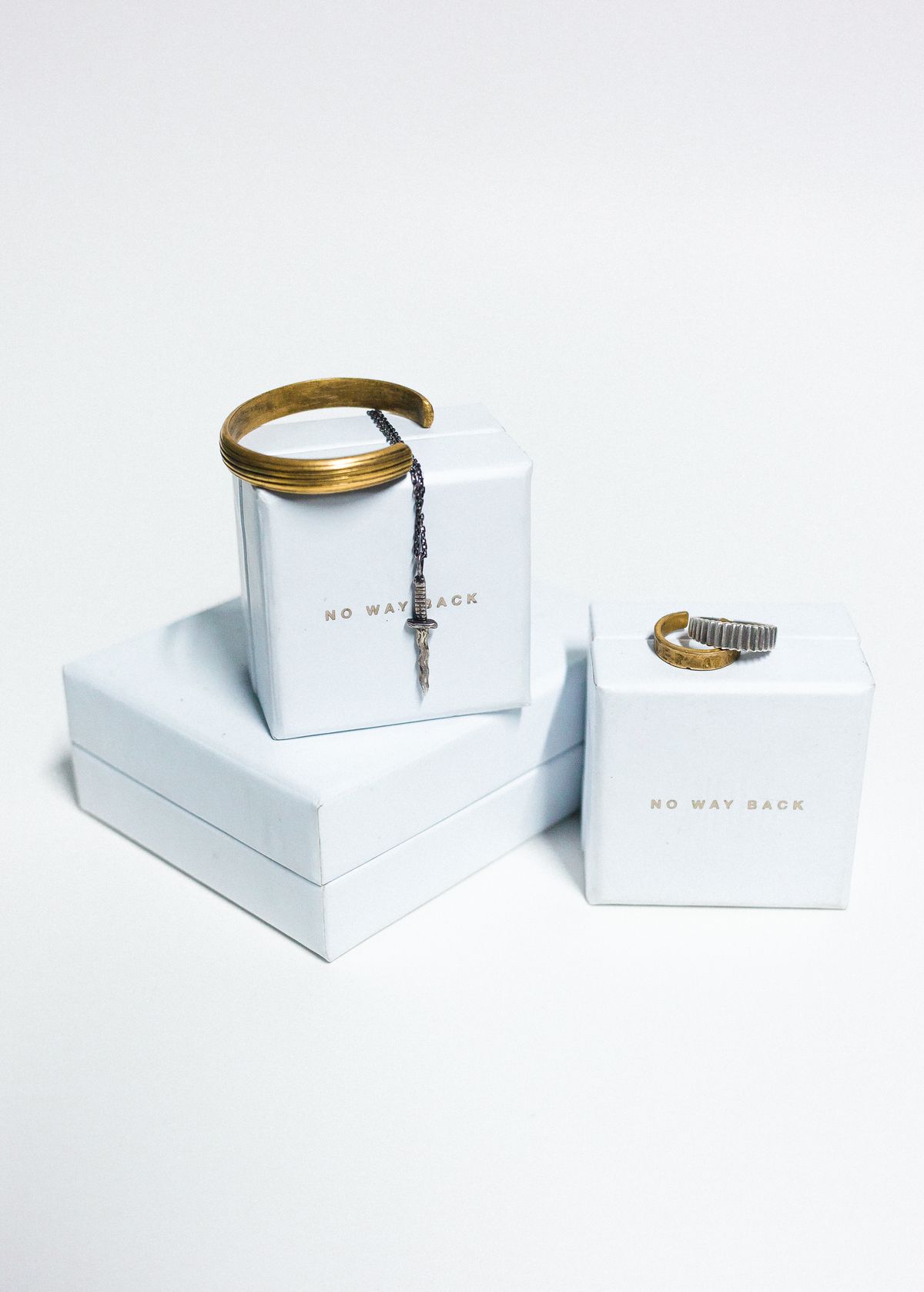
Switching jewellery packaging supplier looks like a minor decision until it goes wrong: an order that arrives late in the middle of a campaign, a colour that no longer matches your last reorder, or a box that springs open in the window display. For a jeweller, packaging is not a consumable. It is the last thing the customer touches and the first thing they remember.
These are the criteria we use ourselves whenever a client compares us with other suppliers. They work just as well for assessing us as for assessing anybody else.
1. Manufacturer, importer or plain reseller
The first question is where the product actually comes from. A reseller sells you whatever is in the warehouse and cannot change a thing. An importer with its own brand controls the mould, the material and the finish, and can correct a defect in the next production run. You notice the difference when you reorder two years later and need exactly the same shade of suedette.
Ask directly: do you work with your own collections, produced to your own specifications? Can you repeat this finish a year from now?
2. Single-unit samples, before you commit to stock
No catalogue, however good, conveys the weight of a lid, the tension of a hinge or how velvet behaves under shop lighting. A serious supplier lets you order single-unit samples of the exact model you are considering, in the same finish the bulk order would carry.
If you are forced to buy 50 units to test, you are not testing: you are buying. In our catalogue, virtually every reference across luxury jewellery boxes and jewellery boxes and customised packaging has its own single sample.
3. Minimum order quantities and volume discounts
This is where smaller jewellers usually get shut out. Some manufacturers will not deal with you below 500 or 1,000 units per model, which is unworkable if you run one shop and want four different sizes.
What is reasonable is no single blanket minimum, and a discount that rewards volume without blocking entry. In our case, volume discounts are 5, 10 and 15 %, and the quantity band for each collection is shown on its product page. Always compare the price per unit at the volume you will genuinely move, not the list price.
4. Logo printing: the real cost and the real lead time
Almost everyone offers customisation. The difference is in the small print. Ask about three things:
- The cost of the die or printing plate, and whether it is one-off or charged again on every order. In our case it is a one-off 30 euros: once it exists, reorders no longer pay for it.
- Lead time with and without the logo. A standard order arrives in 2-5 days in Spain and 4-9 days elsewhere in Europe; with hot foil stamping, allow 21 days. That gap decides whether you make Christmas or not.
- The finish options (gold, silver, colours) and which materials each one adheres to properly.
We go into more depth in our guide to custom jewellery packaging with your logo.
5. Regulatory compliance is no longer optional
This point was secondary two years ago and is now a deal-breaker. The EU Packaging Regulation (PPWR 2025/40) applies from 12 August 2026 and binds whoever places the packaging on the market. If you buy imported packaging, you need your supplier to give you in writing at least:
- That the sum of heavy metals (lead, cadmium, mercury, hexavalent chromium) is below 100 ppm.
- Technical documentation and an EU declaration of conformity.
- Material composition and recyclability criteria.
A supplier who shrugs at this question is passing you a legal risk that is not yours to carry. The full detail is in our article on the EU packaging regulation applied to jewellery.
6. A coherent range, available for the long term
A shop does not need one box: it needs ring, earring, pendant and bracelet boxes plus a shipping carton that all belong together. Buying each piece from a different supplier produces that cluttered-counter effect that quietly lowers the perceived value of the jewellery.
Look for catalogues organised by collection, where one family covers every piece, and check that the collection has been alive for years. If you also sell on sustainability, make sure there is a real eco-friendly and sustainable packaging line, not one token model.
7. Language, distance and service
Buying straight from Asia can look cheaper on the invoice and end up far more expensive overall: freight, customs, long lead times, high minimums and no way to reorder 20 units in a week. A European supplier holding its own stock lets you run on low inventory.
And if you sell outside your own country, check they can serve and invoice you in your language: our wholesale jewellery packaging service works in six languages and ships across Europe.
Quick checklist before you commit
- Can I order single-unit samples of the exact model?
- What is the real minimum, and from what quantity does the discount start?
- Is the logo die a one-off cost or a recurring one?
- What is my lead time with the logo, and without it?
- Will they hand over PPWR conformity documentation and the 100 ppm figure?
- Will the collection I choose still be available in a year for reorders?
- Is there a complete range for every piece I sell?
Seven yeses and you have found your supplier. If you would like to test any of these points against us, get in touch and we will put a quote together with whatever samples you need.