



Cleaning jewellery at home is easy to do well and very easy to do badly. Most of the damage that reaches the workshop does not come from wear: it comes from an aggressive product, a brush that is too hard, or a home remedy doing the rounds online. This guide separates what works from what ruins.
What never to use
Toothpaste is the most repeated mistake: it contains abrasives designed for tooth enamel, far harder than gold or silver, and leaves micro-scratches that dull the shine for good. Do not use bleach or chlorine-based products either; they attack the alloy and can even break a fine chain.
Avoid rubbing dry bicarbonate directly, scouring pads and hard-bristle brushes. And be careful with home ultrasonic cleaners: they are useful on solid pieces, but they can loosen settings and damage porous or treated stones such as emeralds, opals, pearls and turquoise.
Silver: bringing the shine back
For light tarnish, a microfibre cloth or a cloth impregnated for silver is enough: rub in straight lines, not circles, so you do not mark the polish. If the piece is duller, use warm water with a few drops of neutral soap, a soft toothbrush, a thorough rinse and immediate drying.
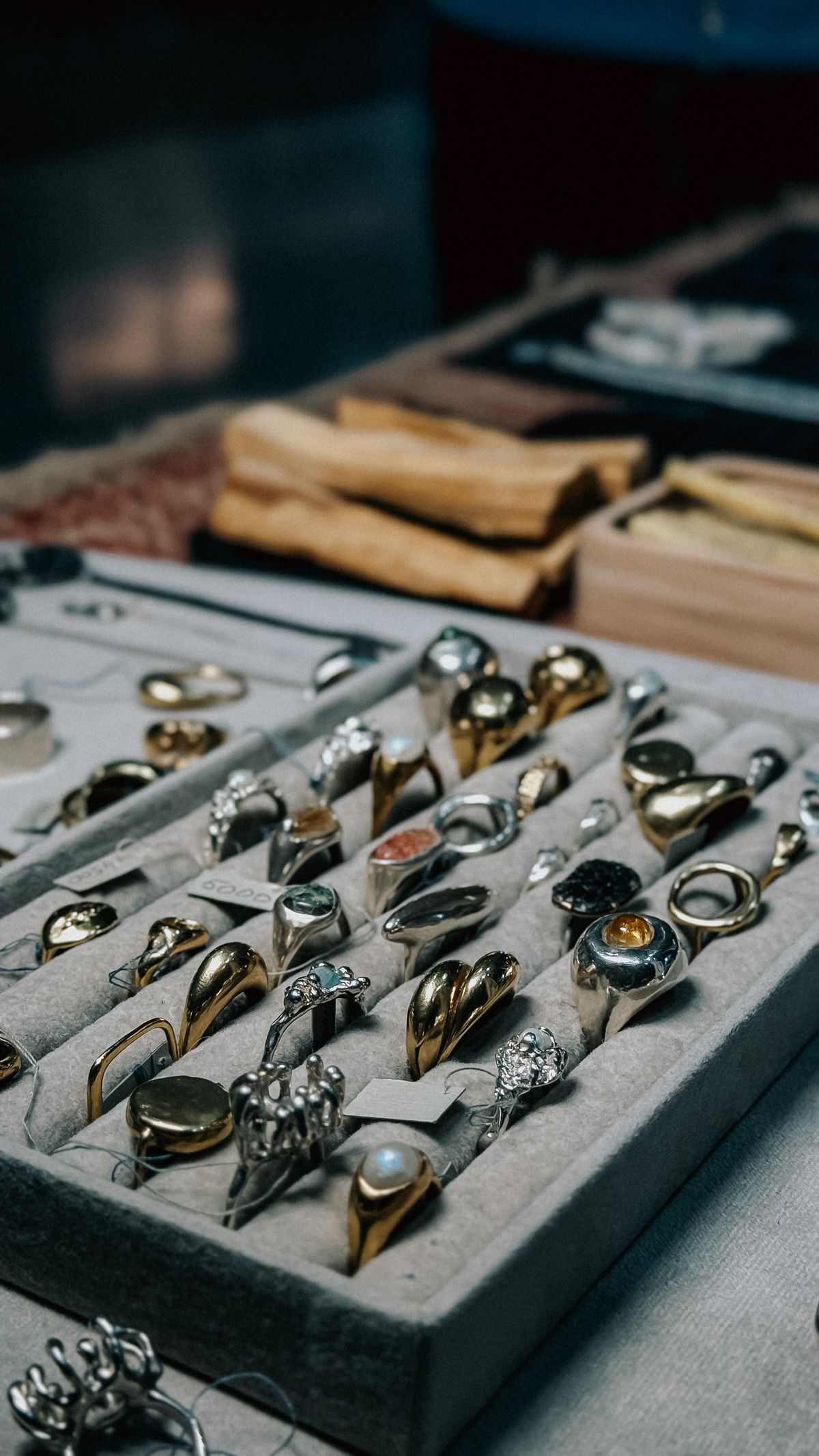
With deliberately oxidised silver — those pieces with intentionally blackened relief — limit cleaning to the raised areas: insist on the recesses and you erase the design. And if the piece is rhodium plated, forget abrasives: the plating is a thin layer and comes away easily.
Gold and stones: the gentle method
Gold takes warm water, neutral soap and a soft brush on the back of the setting, where cream and dirt build up and where a stone loses most of its sparkle. Rinse well: soap residue leaves a film. Dry with a soft cloth and let it air before storing.
Pearls and coral are the exception: no soaking, no soap. Wipe with a slightly damp cloth and dry at once; the necklace thread gets wet and takes a long time to dry, and a porous pearl absorbs any product.
How often to clean and how to store afterwards
A gentle clean every two or three weeks on everyday pieces, plus an annual workshop check of settings and clasps, is a good rhythm. After cleaning, dry completely before storing: trapped moisture speeds up tarnishing.
Keep each piece separately, in its box or an individual pouch, and store the lot somewhere dry and away from direct light. It is the least demanding part and the one that preserves shine longest.